
Biblical Psychology
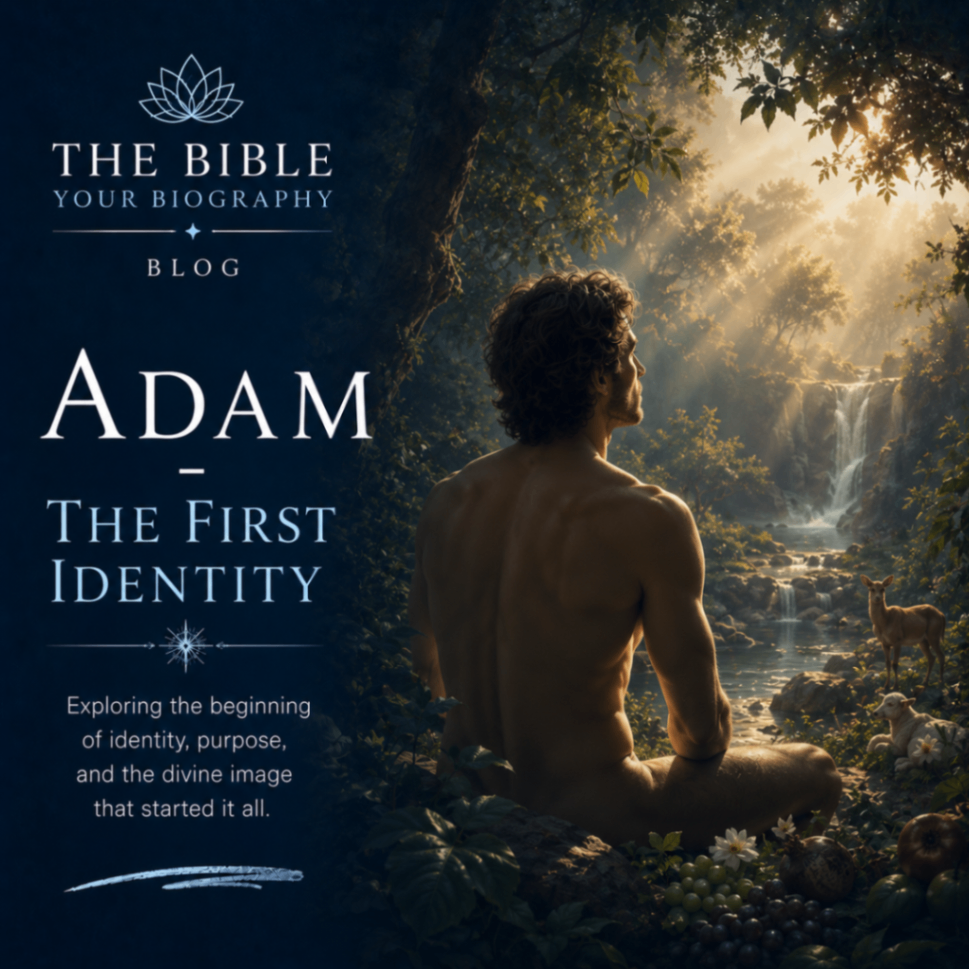
ADAM and the First Identity
Exploring the Beginning of Identity, Purpose, and the Divine Image That Started It All
Adam as a Psychological Pattern
Adam is one of the most important symbolic figures in Scripture. Yet most interpretations reduce Adam to a historical individual instead of recognizing the psychological depth hidden within the symbolism.
From the perspective of Biblical Psychology and Neville Goddard's teachings, Adam represents the first identity consciousness assumes.
Adam symbolizes awareness identifying with limitation.
The Bible is not merely history. It is a symbolic map of consciousness. Every character represents a psychological state. Every story reflects movements occurring within awareness itself. Adam represents the beginning of identity formation.
Understanding Adam Psychologically
Most human suffering begins through identification.
People do not merely experience temporary emotions or conditions. They unconsciously build identities around them.
"I am rejected."
"I am anxious."
"I am poor."
"I am unloved."
Over time, repeated assumptions stabilize into self-concept. Adam symbolizes this process.
Neville Goddard taught that consciousness is the only reality. The assumptions consciousness accepts become externalized through experience. Identity therefore acts as the organizing center of perception, emotion, and manifestation.
Adam represents the first movement of consciousness saying "I AM this."
The Meaning of "I AM"
One of Neville Goddard's core teachings centered on the phrase "I AM."
Before any experience can exist psychologically, consciousness must first identify itself in relation to it.
"I AM successful."
"I AM unworthy."
"I AM loved."
"I AM abandoned."
Every manifestation begins with identity. Adam symbolizes awareness attaching itself to form, labels, and conditions. This is the beginning of psychological limitation. You can explore how the Law of Consciousness governs this process throughout Scripture.
The Symbolism of Separation
The story of Adam is often interpreted as humanity becoming separated from God. Yet psychologically, separation represents consciousness identifying with limitation.
Awareness forgets its infinite nature. Instead of recognizing itself as creative consciousness, awareness becomes attached to external conditions and temporary identities.
This creates fear. It creates insecurity. It creates emotional instability. Adam symbolizes consciousness becoming trapped inside inherited assumptions. This theme runs throughout the Old Testament States of Consciousness.
Identity and Manifestation
Manifestation is not fundamentally about changing external reality. Manifestation begins through identity transformation.
If identity remains unchanged, external patterns eventually repeat themselves.
A person cannot consistently experience abundance while remaining identified with lack. A person cannot sustain healthy relationships while remaining inwardly attached to rejection.
Identity always precedes experience.
Adam reveals the psychological mechanism behind manifestation. Lynna explores this in depth on lynnakteer.com and across The Bible Your Biography podcast on Spotify and YouTube.
Neville Goddard and Consciousness
Neville Goddard emphasized imagination because imagination reveals the creative nature of awareness.
Human beings are not passive victims of reality. They occupy states of consciousness that produce corresponding experiences.
Adam represents the unconscious occupation of limiting states. Awakening begins when consciousness realizes identity is not fixed. Identity is assumed. This realization becomes deeply liberating because it reveals that transformation is always possible.
The Psychological Function of Fear
Once consciousness identifies with form, fear emerges naturally.
The ego begins protecting the constructed identity because it mistakes temporary assumptions for permanent reality. Fear therefore becomes a defense mechanism around identity.
Adam symbolizes this attachment. The more awareness identifies with appearances, the more unstable experience becomes. External conditions begin controlling emotional states. This is why awakening requires inward transformation rather than external control. See how biblical patterns reveal this dynamic across all of Scripture.
Mental Diet and Identity
Neville Goddard frequently taught the importance of mental diet.
Inner conversations reinforce identity. Repeated thoughts gradually become natural assumptions. Over time, consciousness accepts them as reality.
Adam represents this naturalization process. Most individuals live unconsciously from inherited assumptions learned through childhood, trauma, culture, and emotional repetition. Yet consciousness can shift states at any moment. This is the power hidden within awareness itself.
Adam and Spiritual Awakening
Spiritual awakening is not becoming something new. It is remembering what consciousness already is beyond conditioned identity.
Awareness is not permanently limited by inherited assumptions. The moment consciousness recognizes identity as flexible rather than fixed, transformation becomes possible.
Adam therefore represents both unconscious identification and the beginning of awakening. This dual symbolism is essential. The Bible reveals not only the problem of limitation but also the solution through conscious awareness. Explore Awakening to Being to follow this journey further.
The Bible Is Your Biography
Adam is not merely a distant Biblical figure. Adam lives within every person psychologically.
Every limiting assumption.
Every fear-based identity.
Every conditioned belief.
Yet awareness is never trapped permanently. Consciousness can assume new states.
This is why the Bible becomes profoundly personal when interpreted psychologically. The stories are not describing external people alone. They are describing internal states of awareness.
Adam represents the first identity. And transformation begins the moment consciousness remembers it can consciously choose who it will become.
Ready to go deeper? Download the free guide and begin reading Scripture as the autobiography of your own consciousness. You can also explore Lynna's full body of work at lynnakteer.com, the original teachings at Neville Goddard Official, and listen to the podcast on Spotify or YouTube.