
Biblical Psychology
CAIN and Reactive Consciousness
Understanding the Roots of Reactivity, Separation, and the Disconnection That Leads to Conflict and Inner Exile
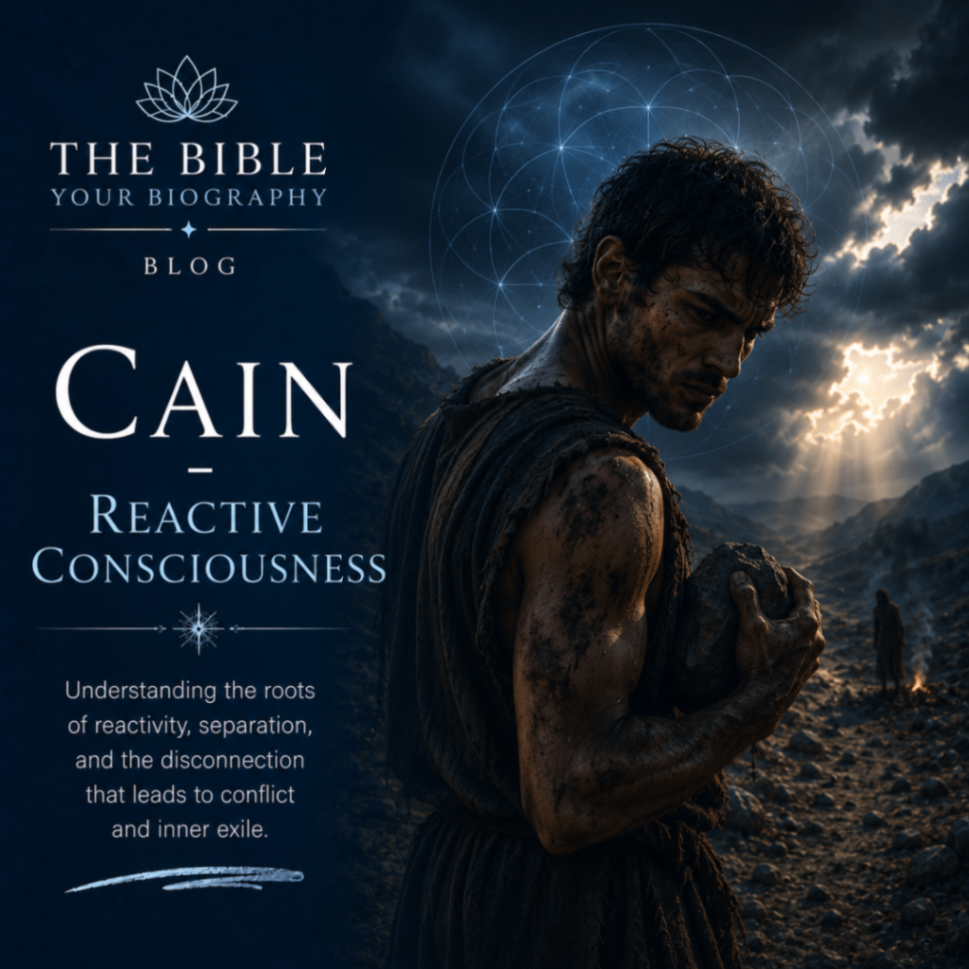
Cain as a Psychological Pattern
Cain is one of the most psychologically important symbols in Scripture. Traditionally viewed as the first murderer, Cain is often interpreted historically instead of symbolically.
Yet through the lens of Biblical Psychology and Neville Goddard's teachings, Cain represents reactive consciousness.
Cain symbolizes awareness identifying with appearances instead of inward creation.
The Bible becomes profoundly personal when interpreted psychologically because every character represents states existing within consciousness itself. Cain lives within every human being. This is why exploring Old Testament States of Consciousness reveals so much about the inner life.
Understanding Reactive Consciousness
Reactive consciousness derives identity from external conditions.
Instead of recognizing awareness as creative, reactive consciousness believes appearances determine worth, security, and identity. This creates emotional instability.
A person feels confident only when circumstances temporarily support confidence.
They feel loved only when others validate them.
They feel successful only when external evidence appears.
Identity becomes conditional. Cain symbolizes this conditional identity structure. Understanding the Law of Consciousness reveals why this pattern perpetuates itself.
Cain and Comparison
One of the core psychological characteristics of Cain is comparison. Comparison creates separation.
Reactive consciousness constantly measures itself against appearances:
Other people's success.
Other people's relationships.
Other people's achievements.
Instead of creating inwardly, consciousness becomes externally focused. This produces jealousy, insecurity, and emotional instability.
Neville Goddard taught that imagination creates reality. Yet reactive consciousness ignores imagination and worships appearances instead. Cain symbolizes this attachment to external validation.
The Conflict Between Cain and Abel
The story of Cain and Abel represents two modes of consciousness.
Abel symbolizes inner coherence.
Cain symbolizes reactive fragmentation.
Abel creates from inward alignment.
Cain reacts to appearances.
This psychological conflict occurs constantly within human awareness. A person briefly enters a fulfilled state inwardly, then external circumstances trigger fear or comparison. Reactive consciousness takes control again.
Cain kills Abel psychologically whenever reaction overpowers assumption.
Why Reactive Consciousness Creates Suffering
Reactive consciousness cannot sustain peace because peace depends upon external conditions remaining favorable. This creates emotional dependency.
Confidence becomes fragile.
Security becomes unstable.
Identity fluctuates constantly.
Reactive consciousness continuously searches for validation outside itself. Yet Neville Goddard repeatedly emphasized that consciousness itself is the source of experience. The outer world reflects states occupied within awareness.
Cain misunderstands the mirror. Instead of recognizing appearances as reflections, reactive consciousness treats appearances as causes. This traps awareness in repetitive emotional cycles. Lynna explores this dynamic in depth on lynnakteer.com and on The Bible Your Biography podcast on Spotify and YouTube.
Persistence and Inner Stability
The Law of Assumption requires persistence. Persistence does not mean forcing affirmations mechanically. Persistence means remaining inwardly loyal to a chosen state despite contradictory appearances.
Reactive consciousness struggles with persistence because it depends upon visible evidence. Cain therefore represents sensory identification. Awareness becomes hypnotized by appearances instead of stabilized internally.
Breaking the Reactive Cycle
Transformation begins through self-awareness. Human beings must recognize reactive patterns instead of unconsciously identifying with them. This creates psychological freedom.
The goal is not emotional suppression. The goal is conscious observation. The moment awareness observes reactive consciousness without becoming consumed by it, inner stability begins strengthening.
This movement shifts consciousness away from reaction and toward creation. See how biblical patterns reveal this movement from reactivity toward awakening throughout all of Scripture.
Cain and Modern Psychology
Modern culture intensifies reactive consciousness constantly.
Social media comparison.
Financial insecurity.
Relationship anxiety.
External validation seeking.
All reinforce conditional identity structures. Cain symbolizes these reactive patterns psychologically. Neville Goddard's teachings remain powerful because they redirect attention inward.
Consciousness creates experience. Identity precedes manifestation. Awareness must stabilize internally before external transformation fully occurs.
The Bible Is Your Biography
Cain is not merely an ancient Biblical figure. Cain represents reactive consciousness within awareness itself.
Every insecurity.
Every comparison.
Every fear-based reaction.
Every attachment to appearances.
Yet consciousness is never permanently trapped in reactive states. Awareness can return inward. It can remember its creative nature. This is the hidden invitation within the story of Cain.
The Bible reveals not only psychological suffering but also the pathway beyond fragmentation. Cain represents reactive consciousness. And awakening begins the moment awareness stops deriving identity from appearances and starts creating from within.
Ready to go deeper? Download the free guide and begin reading Scripture as the autobiography of your own consciousness. You can also explore Lynna's full body of work at lynnakteer.com, the original teachings at Neville Goddard Official, and listen to the podcast on Spotify or YouTube.